a time to mourn

I tried to listen. Looking into his eyes while he spoke, I tried. I really did. But once it hit me, I couldn’t pay attention. I looked into my brother’s brown eyes, interrupted his sentence and blurted out without any explanation or context, “you run all the time.”

He hadn’t heard yet about Ahmaud Arbery, the young black man who was followed and murdered by two white men. I, on the other hand, had watched the video. Over and over. Trying to make sense of it, but mostly making myself crazy. 

Tears welled up in my eyes and I walked away from my brown-skinned friend. 

Why? Why is this happening again? Why does the depravity of so many white men turn into the death of so many black ones? Why do people think that my brothers always fit the description? Why is that a good enough reason to kill them? Why…*sigh*

I’m tired. I’m tired of this story. I’m tired of the excuses. I’m tired of politicizing. I’m tired of the lack of compassion. I’m tired of people not being pissed that this is happening! I’m tired. 

My weak knees and tired soul go to the Lord. No one else has answers to my questions. God is not surprised by the evil in the world. 

But it’s still confusing to me. 

My little brown boy continues to grow. 

I’m afraid. 

“When I am afraid I go to the Lord” the psalmist reminds me. So there I go. 

I fall. God catches me. He holds me as I cry – again. He comforts me – again. He reminds me that He is compassionate and cares. Just like when Lazarus died, Jesus reminds us what it looks like to weep with those who weep.

Don’t tell me not to “make it about race.” Do not tell me that God is sovereign so it’s okay. It’s not that simple, and that’s okay. 

This is a time for mourning. 

Weep. Pray. Run. Be with God. That’s enough.

He is Powerful – Psalm 46:6-7

I was in the kitchen when I heard the front door unlocking. What I didn’t hear was the jangling of keys or the usual chorus of hellos as my children greeted their father with shrieks at the door. I looked into the living room and saw what I had hoped would never happen: one of my children walking out the front door. The volume that left my body surprised me as I ran after him. The girl twin stared at me shocked, because yelling had not yet become one of my signature behaviors (that fight would come much later with postpartum struggles – a story for another day). My feet moved as quickly as they could toward the boy as I screamed for him to get back into the house. 

“What are you doing?! You do not open the door or go outside with mommy and daddy!”

His eyes welled up with tears as I looked down at him – five times his size. 

“You scared mommy! You could get hurt! Do you want to get hurt?”

He shook his head and stood in shock while he cried and I yelled. 

What I wanted was for him to stay in the house. What I wanted was for him to know that I love him too much to let him do things that were not safe. He did not get that from my behaviour. Volume does not always equate power in humanity. But that is not so with God. 

If God raises His voice to speak, it would do us well to sit up and listen. Of course His Word, the scriptures. But also what it says in those scriptures. He used His words to create the world that we exist in. He created our limits with His words. The beaches that are frequented so heavily during these summer months were created by His words. How the psalmist describes His voice makes me feel even smaller than my boy twin when I yelled that day. Instead of a simple fear, I am struck to awe. 

Stop for one moment. The sound of His voice melts the earth.

Take a deep breath to take that in. He created the whole earth with His words and yet…His voice melts the earth. What a great power!

We rage and totter. We can’t figure out what we’re doing and we get angry and fight. Not so with our God.He is powerful beyond what our minds can grasp!

God is with us. This earth melting God who can do whatever He pleases chooses to stay near to us. He chooses to make His home with us. He is not only a transcendent God – a God who is far above us. He is the God who is near to His people. How comforting is it to know that the God who created the earth and can crush the whole thing, is with you and helping you and on your side? Don’t let that pass without being in awe. 

It’s easy to bypass truths in Scripture that we’ve read many times. But what I’m suggesting is that you slow down and soak it in. 

It’s not that He will be with us or that He once was with us. He is with us right now. He isn’t far away. He isn’t indifferent toward us. On the contrary, He has made His home with His church and He uses His power on our behalf. He is our refuge, our strength, our fortress. 

He is where we turn in times of trouble. When I scream in sin and fear at my kids, the Lord is my refuge. I can turn to Him and He will continue using His great power to make me more like Christ. His Spirit reminds me that I am Him child. I have not been left alone to figure it out on my own. I have been lovingly drawn closer because of Christ’s sacrifice on my behalf. 

If your inclination when you sin is to run, make sure that you’re running toward Christ and not away. You do not save yourself. You do not use your own strength. You are not your own refuge. He is these things because He loves us. He is with us. 

After I yelled at the boy twin, I pulled him in close. I held his face and told him that I love him and that I don’t want anything bad to happen to him. I admitted that I am afraid. He cried more and gave me big hugs. It doesn’t matter what he does, I will always love him. How much more does our Father pull us in when we run to Him when we are afraid? When we know that we’ve done something that He does not like. Go back, again, to Christ. Be reminded of who you are. 

If you’ve never believed before, turn now. Admit that you cannot keep to His perfect standard and that you need a Savior. He will not turn anyone away who comes to Him. He is mighty and faithful to save all who turn from their sin and believe in Christ’s work on the cross for salvation. Then the living Christ will be with you to help you all the days that you live.

His Holy Habitation – Psalm 46:4-5

Husband and I are thinking of moving. So, of course, I have been looking online and dreaming about what my ideal home would look like. The kitchen would overlook the fenced in backyard where there is a deck and lots of grass for the children to run and play freely. Inside, the kitchen would open into the dining space because that is where people enjoy congregating. All of our friends and their kids could spread out in this space. Nearby would be a playroom where we could easily hear and check-in on the children, but they’d still have their own space. But that would still be separate from the living room where the sitting area and television would reside. 

At least two bedrooms for the children, but they’d all share one bathroom. Husband and I, on the other hand, would have our own bathroom in our bedroom next to our large walk-in closet. Why do I need a large walk-in closet? So that I don’t have to see any of the clothes or dressers while I’m resting because my bedroom would be my special space of calm. 

Somewhere in the house – not in the kitchen – would be the washer and dryer. They would have their own room with cute signs labeling all the cleaning supplies and a table or counter where I would fold all the clothes while they are still warm. I would be so good at laundry because of my perfectly kept laundry space. Apparently this space would turn me into a completely different person because it would be so perfect. 

All my dreaming does not create a space that is actually perfect. Perfection is found only in the Lord. In Psalm 46, the psalmist goes on to speak about the holy habitation of the Most High. If we look into the new testament scriptures, we know that the river who makes us glad is the Holy Spirit. 

After reading that God is our refuge and strength, this is so comforting! He makes us – His church – His habitation. And helps us there. When I first read this, the first thing that I thought of was heaven, where God resides. However, when reading it altogether, He does not have to “help” heaven when morning dawns. Heaven is a perfect place that is full of His presence. 

His people, however, are in constant need of Him. He makes us glad in His refuge. He is always with us. We are not moved. We are planted with Christ. We were bought and made right with Him and there is no changing that. He helps us in our times of need. Actually, He helps us all the time. 

I think of how much I need the Lord in my daily life. I get my kids ready for the day. I go to work. I interact with so many other image bearers and I want to do it in a way that honors Him. I cannot honor Him without Him. There is no version of myself that brings glory to the Lord on my own. There is no version of you that brings honor to the Lord without His help. He does not leave you to do so either. He instead makes Himself always available to us. His Spirit is a river – always flowing within us – making us glad. Filling us with joy. Making us dependent on Him. 

Don’t minimize that or think that you bring Him more glory if you try to muster up obedience and endurance on your own. The living water that we are privileged to drink freely from never runs out. It never dries up. And He can constantly make all of us overflowing. Rest in Him. Know He is with you…every morning.

God is My Refuge – Psalm 46:1-3

My pastor’s wife asked how our week was at vacation Bible school. Before I realized that this isn’t what people say to the first lady of the church, truthful and sincere words came out of my mouth:

“It was a good week, but I won’t be volunteering again next year.”

I didn’t get into the details at that moment, but I remember the night of the storm. The night when I couldn’t get through the fast food drive-thru quickly enough. The night that we all had to run from the car into the church building and from behind me I heard the cries of my four year old, “MAMA!!! HELP ME!!!” When I turned around I saw the unexpected, her shoe flowing down a stream toward a gutter drain. She stood, watching it while she cried for her mama. 

I sat down the baby – in her car seat, but still outside – to chase the shoe while water poured down from Heaven on us all and thunder applauded closely in the distance. I handed the girl her shoe, picked up the baby, and we ran into the church building. After counting to ensure that I didn’t miss any of the children, we continued on to VBS like it was a normal day.

I ran in that storm, but I did not control it.

I helped in that storm, but I did not start it. 

I felt the rain and wind. I heard the thunder. I saw the lightning. I did not control it.

But isn’t that true for most of the stories of my life? And yours? We don’t control them. We don’t choose the when and where and how strong of the storms. And if you’re like me, you scream and stand still like my daughter did. I am afraid and helpless while I watch the things I think that I need and love go toward the metaphorical gutter drain. Fear freezes me and I can’t remember how to do anything but cry out for help. 

The good news: God hears the cries of His children and He helps them.

How many of these situations are controlled by humans? We cannot control the mountains being overcome by the seas. We cannot control the roar and foam of the oceans. We cannot control the downpour of rain on our lives. 

That’s okay because these verses do not say that we do not fear because we take control of it. It doesn’t advise learning to swim and pretending that the waters are not overcoming you. If the water has overcome a mountain, it is a fair assessment that you have been drowning with the mountain. Instead, the place of refuge – safety, shelter – for us is in God. He is what grounds us and keeps us safe. We go to Him for all we need when we are overcome with life situations. When my husband loses his job again or when I can’t control my own thoughts. God is my refuge. He is where I go and He is where I stay. 

What else is the Lord for me in times of fear? My strength. Being our own strength and living our own truth (don’t even get me started on that nonsense right now) is what we are constantly told will sustain us. I’ve been told that I am enough by every online influencer (just learned this was a thing recently) and friend who means well. But I don’t need to be reminded of my strength. My strength is questionable at best. Instead, it is the never-ending strength of the Lord that I need. He sustains me. 

When I look to myself the waters rise and I am overcome by anxiety and fear. I can’t see how I will get out and the circumstances cause me to drown in the high waters. But that’s because I can never swim well enough to make myself feel still in the midst of it. But God. God is not surprised  by my storms. It doesn’t shake Him at all that things are not going in ways that make me uncomfortable or uneasy or that cause me to soak my pillow in tears each night. He is my refuge and my strength. 

It’s not only that He is those things, but He is available and present. I tend to swing too far in the direction of God as transcendent and forget that He also is my very present help in times of trouble. What good would it be for Him to be our refuge and strength if He wasn’t also helping and available to us? Thankfully, He is all these things. Run to Him faster and harder than a mom in the rain chasing a flip flop down a stream.

What is Complementarianism?

In the wake of fourth-wave feminism, we come again to a question that has plagued womankind since the fall in Genesis: What is a woman’s role? Now hold your horses, folks, this is a much more nuanced issue than it first appears. It extends to the role of men and women in the church and in the home. (Let the record show that there is much more to this question than what is presented in this article, but here you’ll find a pretty good start.) The perspective that I intend to explore here is called complementarianism, which, simply put, means that women are not made to teach with authority or lead men spiritually. This excludes women from being pastors, elders, or spiritual decision makers for their homes.

I know this is tough, but please don’t stop reading just yet.

Why would any sane woman subscribe to such a seemingly limiting view on gender roles? Are we not just as capable as our male counterparts? What fresh misogyny is this?!?!

All good questions, ladies!!! As a self-proclaimed sane and capable woman (and a sinner saved by grace), let me offer some insight as to why this position on gender roles has persisted in the church for the last 2,000 years.   

To best understand the complementarian perspective in spite of my subconscious twenty-first-century biases, I have found it helpful to examine both what complementarianism is and what it isn’t.

Gender roles in ministry are not actually as archaic as you might think. The role of women in ministry has been hotly contested since the founding of the early church. It is incorrect to assume that now is the first time in history when women have been “empowered” enough to unveil a “better” interpretation of the scriptures on women’s role in the church. (see Daughters of the Church: Women and Ministry from New Testament Times to Present [1987]). In fact, gender roles as outlined by complementarianism are very full of biblical wisdom. That means, rather than an institute of blind tradition, gender roles are an institution set up by our eternal God.

complement...

While interpretations of passages dealing with gender roles abound, it is important to read these scriptures in context with their intended meaning intact. When we come to this scripture with humble hearts, the truth behind complementarianism becomes clear. Genesis 2 gives woman the purpose and designation of “helper” or ezer when she is first created. This Hebrew word ezer is the same one used for the Holy Spirit other places in scripture (e.g. Deut. 33:26, Psalm 33:20, Hosea 13:9). This position of the woman as a helper is therefore clearly a necessary one and an important one. “It is not good that man should be alone,” declares the Lord in Genesis 2:18, so what would have been the point of God creating another human with the same person as man separately from man? For this answer, we must continue digging in scripture.

Complementarianism also isn’t legalistic. The Bible is clear when it commands that we not add to or take away from scripture (Deut. 4:2, Deut. 12:32, Rev. 22:18), but many people claim that imposing restrictive roles on women in ministry does just that– it reads too much into the role assigned to women in the Bible. But within the appropriate interpretations of biblical gender roles, complementarianism is actually very liberating. The fall of Adam and Eve put a nasty kink in the desire of woman, that our desire would be for our husbands and they would rule over us (Gen. 3:16b). Since then we have been enslaved to a strange longing for control, whether that is being “the neck that turns the head” or “the one who wears the pants.” The complementarian perspective, along with any other renewed perspective we gain as we learn more about God through His Word, satisfies our longing for purpose in a way that is pleasing to God rather than a way which leads us to demean and reject our brothers in Christ. What on the outside might feel oppressive to women specifically (scriptures like 1 Timothy 2:11-15) actually stems from the oppression of sin on humanity, but give us hope for redemption in our God-given purpose of being uniquely created to complement our male counterparts as child-bearers, encouragers, and upright believers.

So finally, this idea isn’t anti-woman. Let me repeat it so that I am not misheard: COMPLEMENTARITY IS NOT A FORM OF OPPRESSION. Because of the oppression that women have faced throughout history (due in part to the curse of Eve in Genesis 3), it is often easy to overcorrect and attempt to throw out our God-given differences altogether. Many will argue that the place women are put in scripture is fundamentally less-than men and in fact contributes to the ubiquitous violence committed against women. But, sister, I am here to tell you: the Bible does anything but stifle women. In fact, it is very edifying to not just womankind, but humanity as a whole! There are numerous examples of strong women in scripture who hold positions in leadership (Judges 4:4, Esther 4:14, Exodus 15:20), business (Acts 16:14, Proverbs 31:18), church work (2 Kings 22:14, Romans 16:1), homemaking, and even combat (Judges 4:21, Exodus 38:8 if you want to get speculative) without compromising their role as ezer. And these are just a few examples, I could go on. Although the Bible does establish different roles for men and women in some aspects purpose, the personhood and equality of the genders is made clear throughout scripture (Genesis 1:27). We are all encouraged to use our gifts within the role we are given, being male or female.

Reading this may have hurt you. Sister, trust me, I feel your frustration. The thought that I need men to lead me in my church and in my future home is terrifying. But the burden is not mine and yours to bear alone; men need us to support them, counsel them, and mediate disputes. Man and woman comprise two halves of the whole of humanity which the Lord has created to bring glory to Himself. But zooming out, our deep and frightening need of each other becomes infinitesimally insignificant compared with the deep and raw need we have for Christ. Even more, our need for each other reminds us of our need for Him, and isn’t that the point of it all?

(Rooted and Redeemed wants to thank Shannon Mann for writing this thoughtful and insightful article for us)


Attributes of God: Creator

The thoughts weren’t the problem. The words were the problem. I typed out word after word and nothing that I said had power. Sure, the ideas were okay – even good – but the actual words weren’t holding weight. I could not communicate the ideas well. What I wanted was to create an inspirational, truthful piece that would cause others to look at the cross. What I created instead was a mess that needed to be deleted.

This is what happens when I try to create out of nothing. I do not have that power. Even the words that come out of my mouth – or onto a page – are not only from me. God is not the same. He creates without needing words created by others. His thoughts are perfect. And they perfectly executed the beginning of the world.

God alone has the power to create something from nothing. This is evident in the Biblical account of how the world came to be. Genesis 1:3 describes not only what God created but how He created. It says “And God said, “Let there be light,” and there was light.God did not need supplies to make the world. He didn’t have to run to Michael’s or Target to get the tools He needed to create light or animals or man. God simply spoke and it was so. He commands the universe and the universe declares His praise (Romans 1:20). This is a fact that we all know but often forget.

So what are the implications of being reminded of God’s power over creation? It’s a change in perspective and once we know it to be true– it changes the way we live our lives. If we live every second of every day knowing and contemplating the power of our God we would be more able to trust Him fully. After all, if this God that merely speaks and intricate beings are created, cares for us and is for us, what have we to fear? Romans 8:31b-32 lays this out beautifully: “If God is for us, who can be against us? He who did not spare his own Son but gave him up for us all, how will he not also with him graciously give us all things?” The Lord provides all things according to His will. We know that His will is to prosper us and not to harm us. Therefore

This is the mindset that I pray we live more of our lives in: That the God who creates effortlessly and has all authority on earth and is in heaven has plans for us (Jeremiah 29:11). He is for us and not against (Romans 8:31). When we realize this truth and live fully in the knowledge of the Lord’s omnipotence (His unrestricted power), we free ourselves up to do the work He has for us.

When we truly believe that the Lord is all-powerful we are able to trust Him because when we are weak He is strong (2 Corinthians 12:9-11). When we accept Christ the Holy Spirit dwells within us, that means  God, fully powerful, is actively living and working inside of us! This doesn’t make us all-powerful, but it does allow us to do so much more than we could ever dream of accomplishing on our own.

The same powerful God who created the world helps us. We are promised help from Him and via that help, we are able to do so much more than we can on our own. Jen Wilkin describes it beautifully: “His thoughts never wander with fatigue. His arms never grow too weary to support and protect. Our heavenly Father is strong, and perpetually so.” It is a wonderful description of the verse that describes what God’s presence on our lives accomplishes: “When I am weak; then I am strong” (2 Corinthians 12:10b). When we are weak on our own, He enables us to be strong. He provides for us with His never-ending power.

So when I can’t find my words, He provides. He gave me a wonderful friend that is willing to make comments and edit and share ideas with me. When I feel completely inept and powerless, He promises that He will use those weaknesses. The Lord works even though I am weak. His strength is not diminished by my inability to do something on my own. He equips and enables so that He may be glorified.

Soli Deo Gloria.

If you were more conscious of the Lord’s power, how would your life look different? How could you set yourself up to be more aware of the Lord’s power?

Memorization Challenge

Last time we talked about memorization and it’s specific benefits in our lives. So instead of crossing our fingers and hoping you’ll hear what we have to say and apply it to your own lives, we are going to challenge you. It’s something we are doing with you. Seriously. Let’s memorize scripture together so that we can start to build a wider and deeper foundation.

Let’s take the time and sit down to memorize John 1:14.

UGHHHHHHH

I recommend setting this photo as your screensaver on your phone. Throughout your day, you will see it and remember to learn a chunk of it. This has helped me learn countless verses and is, in my opinion, not as overwhelming as a reminder or another thing to add to your to-do list.

Other ways you can memorize would be repeating it aloud or writing it down over and over. You could post it around your house, or somewhere you often look (like a bathroom mirror). It could be some combination of these, or perhaps it is something else entirely. Find what works for you and use it!

So make your own background or use mine. Write the verse or sing it! Whatever the method, let’s start memorizing together so that we may grow in our faith personally and in a community. To join the conversation head to our Facebook.

Bible Memorization – Why Does it Matter?

I struggled with my self-image. I use the past tense purposefully, not because I never struggle with my self-image now, but because the days of despising myself are over. We have all been there! Even if the struggle is just the thought of “those extra few pounds make me look awful” or “I’ll just never be pretty enough” (you get the picture). Jesus is the one that changed this in me. It wasn’t an emotional kind of change, though. No, this change came from a single verse in the Bible by the grace of God.

We’ve all heard the verse, but try to hear me out and pretend you are hearing it for the first time. Proverbs 31:30 says “charm is deceptive and beauty is fleeting but a woman who fears the Lord is to be praised.” Although I believed my struggle was physical, this verse showed me that my problem was a lack of trust in the Lord. Take a second to dwell on that, friends: the culturally prettiest woman is not who we are called to praise, but the one that fears the Lord. The woman that submits in awe to the living God who created everything deserves praise.

PSALM 119

I memorized this verse and hold it in my heart and repeat it to myself whenever those thoughts creep in. This very first instance of depending on scripture opened my eyes to see the power it has in our lives and how I can give glory to the Father with my thought-life. I’m not the first person to have learned this and put it into practice, of course.

It’s an impressive and daunting task, memorizing scripture, and it’s hard to have enough discipline to practice, learn, and retain one verse, let alone a whole fleet of them! As hard as it may seem (and it’s truly not all that difficult), memorizing scripture is important to our private lives a well as our communities.

The importance of memorizing and knowing the Bible is that it is useful for teaching, reproof, correction, and training in righteousness (2 Timothy 3:16).Another reason to memorize scripture is that we are called to it! Colossians 3:16 commands us to “Let the word of Christ dwell in you richly…” The Bible is not meant to be something we think about only every so often, but something that we dwell on throughout our busy days filled with hardship and temptation.

When we memorize parts of the Bible, we bring them to the front of our minds. So when, for example, I am not honoring the Lord with my thoughts and dwell too much on myself rather than Him, it is useful for me to have Proverbs 31:30 memorized. I’m still working on my selfishness and other sin patterns, but this verse has changed who I am. The importance of Bible memorization is explained well in Psalm 119:11 when it states “I have stored up your word in my heart, that I might not sin against you.” Memorizing scripture is an effective tool for resisting the temptations of our sin nature.

Storing up truth from the Bible in our minds changes the way we live our lives because it changes how we think. No military general would ever send men into a battle ill-equipped so why do we do that to ourselves? The Lord gave us the whole of the Bible to use as armor and weapons (Ephesians 6:10-17) to fight against our natures- just like I use Proverbs 31:30 to this day. And our examples don’t stop there.

Jesus was perfect. He did not have sin nature like we do, but He still utilizes this tactic in His own life. We see Jesus memorized scripture and put it into practice in this same way even though He was without sin. We can read Luke 4 (go do it now!) and see a perfect example of how and why we should be memorizing scripture! Fighting against our sin nature is not the only reason to memorize truth, though. It’s also important because it feeds our souls.

It is said in Matthew 4:4 that “‘Man shall not live by bread alone, but by every word that comes from the mouth of God.’” We were made to live on the Word of God, not just on the things of this world. So when we allow God to change our personal lives to reflect Christ more clearly it creates a ripple effect into our fellowship with other believers.

Our actions matter. What we say and do effects not only ourselves but those around us. We need to serve our friends and loved ones as we are called (Philippians 2:4). One way to serve is to be wise and thoughtful in actions, deeds, and words using the truth found in the Bible. When we pour out not from ourselves, but from Christ and His Word, we serve others well.

Let’s serve others and strengthen ourselves to battle our sinful habits. Please don’t just read this and let it fade from your mind. I won’t let it fade from mine, either. I will continue to memorize and build up my arsenal so that I may be more like Christ. Next week we will be challenged on this topic. So dwell on the truth found in the Bible about such things. Pray that the Lord will enable you to push yourself to memorize and store up His Word in your minds. It has been a blessing in my life and I know it will be in yours as well.

What is the biggest excuse you use that gets in between you and the time it takes to memorize scripture? Pray about it, confess it to the Lord. What has to change in you for the challenge next week to be effective in your life?

Bible Study Resources

Choosing how to study the Bible can be a daunting task. Which one do we use? How do we know whether or not it’s trustworthy? Where do we begin? Well, those are fair and difficult questions that I can’t completely answer for you. But here are some resources to help you as you work to study the scripture.


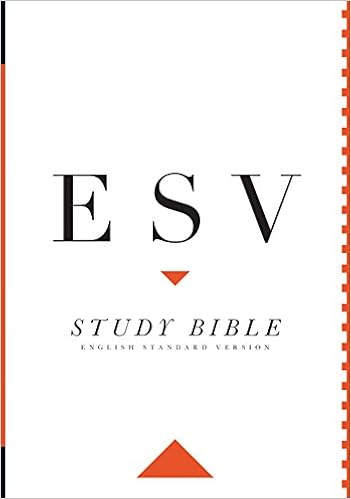
We use the English Standard Version (ESV) for all our scripture references, unless otherwise noted. Bibles are translated in two ways: to convey word choice or to convey meaning. The ESV is a word-by-word translation. Here is a link to the ESV study bible. It’s helpful because it will have notes to help you understand.

The ESV Study Bible on Amazon


Personal Bible Study Helps

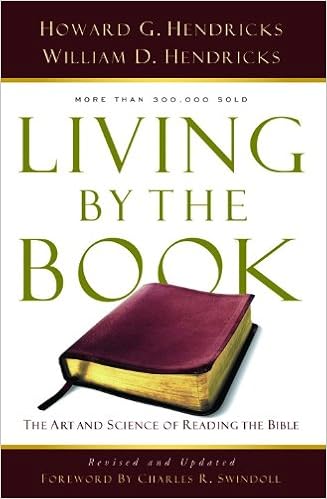
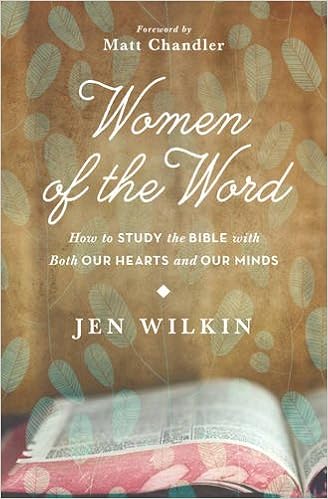
The two resources that helped me develop my every day study of the Bible are Women of the Word by Jen Wilkin and Living by the Book by Hendricks and Hendricks.


Living by the Book is a more complex and in-depth explanation of study. It’s a bigger book that helps lead it’s reader through in a studious way.

Living by the Book on Amazon


Women of the Word is easier to read. Her style is very conversational. She will lead you through how to study, step-by-step, and why it’s important.

Women of the Word on Amazon


Bible Studies

The following are Bible studies in that they are books that lead you through specific scriptures. It’s not a how-to on studying on your own, but studies of specific books of the Bible.


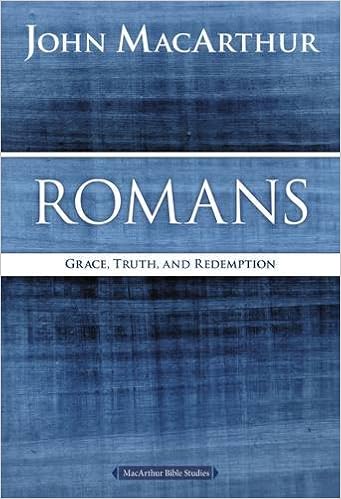
John MacArthur Bible Studies: 

This is a series of studies that include commentary and questions to help readers understand.

Bible studies on Amazon


Lara Williams Studies:

Lara looks at her personal experiences through the lens of scripture. And uses that to help you learn how to study the Bible.

Bible Studies and Books by Lara Williams


1 Peter - A Living Hope In Christ.jpg


Jen Wilkin Resources and Studies:

Here are Jen Wilkin Bible studies and books, including the one listed above.

Books and Bible studies by Jen Wilkin


Devotionals

These devotional resources are shorter, daily reads. They will help to focus your mind on the Lord while opening up some deep truths.


New Morning Mercies by Paul David Tripp

New Morning Mercies is a modern devotional. He is compelling and easy to read, but the truths that he unpacks are solid and will give you something to think about and meditate on throughout the day.

New Morning Mercies


Morning and Evening by Charles Spurgeon

Morning and Evening is a classic devotional. Because of the classic nature and how old this is, some of the language is difficult to read. However, if you’re willing to sit with it for a tiny bit of extra time some days, it is packed with deep truth.

Get Morning and Evening in your inbox


We’d love to talk to you about any of these resources or ones you’ve used in the past! Let us know what you think of this list and what we missed.

How to Study the Bible – An Introduction

I walked into the Christian bookstore and went to the section with the signs reading: “Devotionals.” Easy! Go there, grab a devotional on a book of the Bible, and leave.

Not so easy.

Looking around that section at all the different books about motherhood, womanhood, verses of the day, mostly edifying and helpful (while others unfortunately should not have been in the Christian bookstore) was confusing. As I stood there staring at the mix of books, I kept thinking that it had to be simpler than this. Why couldn’t I find a book to help me learn about the Bible?

A kind woman wearing a maroon vest turned the corner and asked if I needed anything. I told her that I was looking for a devotional to help me understand the Bible better. I explained that I wanted something to ask me questions and help me along the way as I read the Bible. She then explained that I was in the wrong section of the bookstore and lead me over to the wall of Bible studies.

The difference between a Bible study and a devotional is an important one. A devotional gives comments or encouragement on an idea or verse. There may be a handful of scripture references, but it’s mostly commentary to help you connect.

pray rr

A Bible study, on the other hand, helps you learn what the Bible says and what it means by what it says. It helps you know and understand it first, then connect and feel it second. While a good devotional is important, a full theology (your thoughts about God) cannot be established and rooted in truth without understanding the Bible in context including how the topics and ideas of the Bible flow throughout. A book on systematic theology can also help you put the categories and topics together in a coherent way, but that’s a topic for another day.

There’s not just one correct way to study the Bible. There are book options, but you can also study it yourself, at least to start.

This is a step-by-step of my preferred method – adapted from Jen Wilkin, Lara Williams, and Hendricks. Two things before you begin: research the context of the author and people to whom they are writing of whatever book of the Bible you are studying. Context is key to understanding what the writer meant by what he said. Second: Pray. Pray that the Lord would reveal Himself to you as you study His word, seeking to know Him more to love Him more.

Step One: Read the Bible.

This is the “what does it say” portion of studying. Read the Bible. That probably seems too simple. But that is the first step. Just read. Start with a book and stay there until you complete it. Read it all the way through. Multiple times. The shorter books, like Ephesians or Galatians, can be read through in a sitting. When I’m unable to read it multiple times, I listen to it. Reading through a book or multiple chapters helps you to keep it in context.

Repetition helps us see or hear things slightly differently. We’ll catch a phrase or word or detail that we’d missed the first few times. As I’m reading, I take note of words or phrases that repeat. Then lookup words that I don’t quite understand or that would make the meaning clearer with definition. This is a step that I learned reading Women of the Word, by Jen Wilkin. She looks up words, in English, and writes their definitions. Bible translators try to find the best words to communicate what was said in the original language, so we need to understand what the words mean in our own language.

Step Two: Summarize and explain

This is when I get into the “what does it mean” portion of breaking down a verse. I will rewrite it in my own words and look for verses that cross-reference and support. Sit with the scripture for a while. One urge I have is to look up a commentary as soon as I get stuck in a spot. Fight the urge! Instead, pray about it. Pray that the same Holy Spirit who inspired the writers of the scriptures and lives in you will help you understand them. Don’t worry when it’s confusing or you have to reread multiple times. Sit with it for a while before you look for help. At the same time, don’t think of commentary or sermons as a negative. They are terrific helps!

As you’re going through this step, I take note of any attributes of God that are in the passage. What is the passage telling you about God? That is- who the Bible is about. It’s not about you. It affects you and tells your story, but it’s not about you. This is also the time that I write any truths, promises, and commands.

Step Three: Application

This is the “what do I do now?” portion of the study. Take it personally. What did you learn about yourself? What sin do you need to confess? How can you glorify the Lord? There are many questions to consider, but these are a few.

Bible study is amazing because it is simple enough that you can get a grasp of the concepts. But it’s complex enough that you can study it your whole life and never run out of topics or depth.

On Thursday we’ll be sharing some of our favorite Bible study resources. The idea is to know God more by understanding His word more fully.

What are your biggest struggles or fears when trying to study the Bible for yourself?